
XPEY' BY SHANNON WATERS
The morning sky is clear and blue.
Snow-draped Cedar boughs glint in the sunlight. The tires slosh as they roll over the snow-covered gravel road, breaking the serenity.
The car moves up the steep hill, but the tires can't grip and start to spin. Gathering myself, I slowly back down the hill to try again. Keeping steady momentum, I get only
slightly further on my second attempt.
Frustrated, I take a deep breath. I must consider another way into the conference centre on Cowichan Lake. Backing down the hill, I scan the horizon.
I take in the Cedar trees around me. I acknowledge that the older trees, able to live over 1,000 years, are no longer in this place. Moments later a red four-by-four
vehicle crests over the top of the hill. I release a small whoop of delight as it heads in my direction.
I am not the only one having trouble. The four-by-four is gathering people who have gotten stuck on their way to the much-needed conversation about Western redcedar, known in the Hul'q'umi'num' language as Xpey'.
Ron George, Tousilum, had a vision to plant a Xpey' tree for every child who did not come home from the Residential Schools. A western scientist told Tousilum that his vision was futile, as Xpey' only had 60 years until they were extinct.
The words cut Hul'q'umi'num' peoples deeply. Grief compounds upon grief, and a steady undercurrent of anger flows underneath.
Xpey' are a cultural and spiritual keystone species that are an integral part of the life of First Nations communities along Vancouver Island and beyond. This relationship stems from time immemorial. Xpey' are integral to our medicine, our clothing, our art, our homes, and our transportation.
A common understanding amongst western scientists is that our beloved Xpey' is particularly vulnerable to climate change. This follows more than a century of logging and Land desecration. Tousilum declared that we would not stand by and watch Xpey' disappear.
So, we are coming together, as harvesters, weavers, carvers, western scientists, Land holders, and Land managers. We listen to each other about what we are observing on the Land, to develop a shared plan to support Xpey', for generations 500 years from now.
The gathering is already underway when the four-by-four arrives at the facility. The circle opens and I self-consciously pull up a chair. I hope there is a way that I, as a
physician, belong to this important work. People honour Tousilum, who is unable to attend due to illness, and thank his brother Robert George, Qwiyahulthw, for helping to facilitate the gathering.
The circle holds our truths: Xpey' are challenged by the droughts experienced in the Cowichan Valley; Xpey' are less numerous and their bark is changing; carving Xpey' into poles or canoes is now a rare experience for communities.
The circle allows another story to be told: Xpey' will not go extinct, but north-facing slopes, where prevailing winds support more snowfall and shade supports water
retention, need to be protected as this is where Xpey' are most likely to survive; Xpey' parent trees can be selected for drought resistance, creating off spring that have more resilience.
Xpey', I contribute, are a vital part of our ecosystem, which is our health system.
Tending our relationship with Xpey' supports the health of trees and humans.
Qwiyahulthw looks around the circle with his co-lead to determine who they will call to witness this gathering. This is a role, for generations upon generations, where community members are selected to remember histories. This sacred practice sustains the maps of our communities. Storytellers are still honoured today by payment for the work they do to witness, remember, and share.
In some settings only men are called to witness. I look around the circle to guess who might be named. Qwiyahulthw names two men I know well.
Then he calls a woman's name as the third witness. She is a younger woman I am getting to know and greatly respect. I wait to know the last witness, four being a sacred number.
"Shannon. Shannon Waters, you are called to witness," Qwiyahulthw says in a loud voice.
With a deep breath, I raise my hands and nod. The circle hands me responsibility as a witness. I know how I belong to this work. I know my role in the vision and plan for Xpey'.
The witnesses share stories of coming together, receiving Waters that fall, retaining Waters on the Land, and releasing Waters as they fl ow through Xpey'.
My relationship with my ancestors, with my community, and with generations 500 years from now, urges me to tell this story.
ABOUT SHANNON WATERS
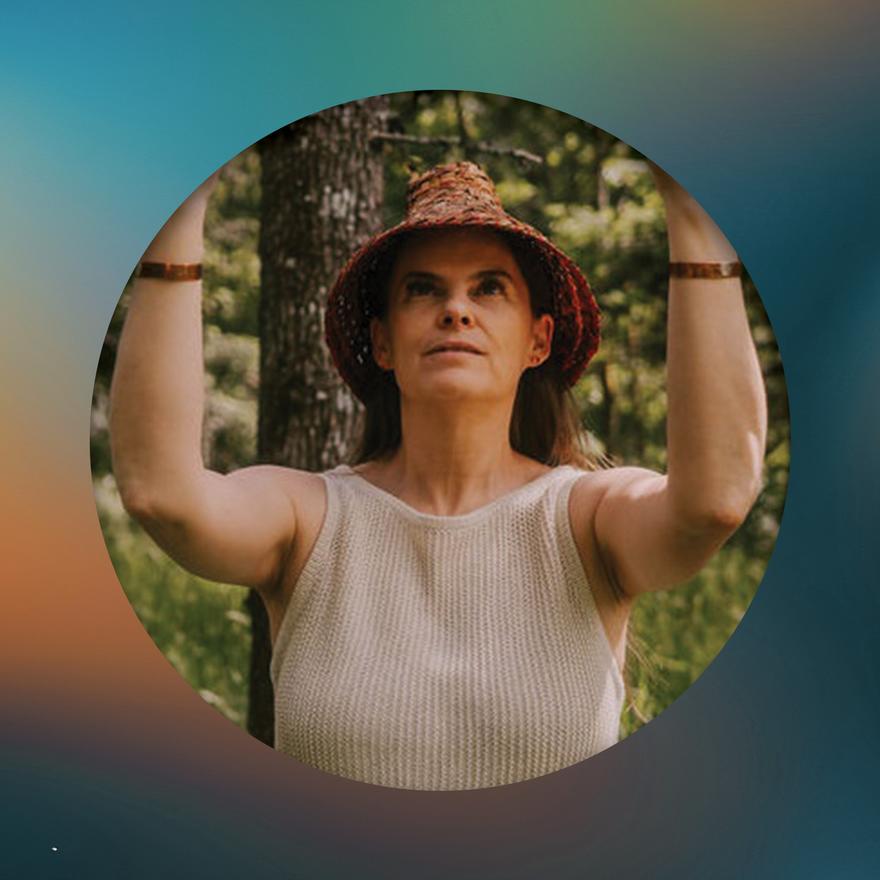
SHANNON WATERS ‘Een ‘thu/. My maternal roots are Hul’qumi’num (part of a larger First Nations group referred to as Coast Salish). I am a member of Stz’uminus First Nation with many family ties to Cowichan Tribes/Quw'utsun. I am a daughter, sister, auntie, wife and mother. I bring my gifts to the collective medicine that heals us. I continue the walk of my Hul’qumi’num ancestors, tracing the path of water as it connects the peoples. I raise my hands in gratitude to the land, the water, the plants and the animals. I live this practice at the place I steward with my family, at Hwtl’upnets/Maple Bay, British Columbia, which nourishes us emotionally, mentally, physically and spiritually. My intent is that, after all this place has given, I will be able to give something back. The piece I have shared is the prologue to an upcoming book I am writing titled “Coming Together: Journeys of the Water Cycle”.
Order your 2026 Mystics Almanac now and gain the peace of mind to carry you through the entire year.
